[Dennie wrote this auto-bio-chronology in stages.
In a June 25, 2012 Internet Archive capture of www.tc-of.org.uk/dennie_briggs the auto-bio-chronology ends at "John died in November of 1995.//I continued to write about projects I'd been involved in and Craig Fees offered to receive them in the PETT Archives." The last time it was captured was on September 26, 2014, on www.denninebriggs.com/archive/biography. In this version the story continues with a new section called "1995", and concludes with "2011", the final word going to Dennie's stroke.
In the 2012 version the title for the piece was "My Life", which is the title used here. In the 2014 version it was "Biography". The fuller 2014 text is the version used here.
The earlier capture ends with Dennie's statement that John died at the end of November 1995. Without correcting this, he says in the 2014 new 1995 subsection that John died on December 4.]
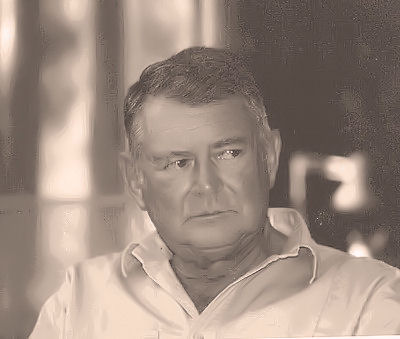
Introduction
I was born in a bank on March 24, 1927. Well, what was formerly a bank, a victim of the Great Depression, that had been converted into a few apartments in a central Minnesota village. My parents had married and settled there where my father had found work.
When World War II broke out, we moved to Cincinnati. I was in high school. The sudden change from a small town to a large multi-racial city was enormous for me. After two years we moved again, back to a small town in the mid-West. I was now in my last year of high school (1944) and, as I didn’t want to be drafted into the Army, joined the Navy. I wanted to travel, meet new people, have new experiences. After boot camp, my assignment to the Treasure Island Naval Base in San Francisco, rescued me from the confines of the mid-West and opened a new world for me. The War ended rather abruptly just as I was beginning to acclimatize to this new environment.
Upon discharge, I enrolled in college, kept active in the Naval Reserve, graduated and received a commission. This was 1950 during an “economic recession.” Jobs were scarce, and so I requested active duty in the Navy for one year. That year was extended for eight, which I’ve recounted here in the Navy documents. I left the Navy and spent five years working in prisons, then moved on to teaching. Maxwell Jones brought me to Scotland in 1968, where I spent the winter and then the following year at Henderson. In London, I met John Maher, who was to be my partner for the next 25 years, living in Paris, San Francisco, and Rome.
Retirement has meant a means to escape part of the hustle, the “trance of ordinary life.” But there is routine. I usually begin “work” (writing) around 4 AM, when there is quiet, solitude, no disturbances. About 10, I look after other things: gardening, errands. I enjoy cooking, trying new recipes, and entertaining a few friends, going back to the days in London when I took cooking courses; then John came along and got the grand treatment from Rosemary Hume and Muriel Downs at their Cordon Bleu School. I take a nap in the afternoon. I watch very little television; usually in the evenings I read or listen to music.
Perhaps I’ve made-up for my insolvent beginnings by trying to lead a life rich in beauty, and in relationships.
1. Early life
My father was present when I was born. Later that day, he wrote to his mother:
"That’s the worst thing I ever experienced. Never had no idea it was like that. I never knew what a mother had to go thru but I guess it was worth it. Ruth’s mother is here taking care of the baby.
Gee Ma, he’s cute. I have to look at him every few minutes. He’s got BRIGGS just wrote on his face. He looks like that picture of Pa in that little suit. I can’t wait till we come down.
He sure is big, just as fat and solid not a bit wrinkled or red and has the most black hair and blue eyes. I believe he is going to be a prize fighter he has such a big chest and cries so loud. The Dr said he sure was as perfect as they could be made."
My mother had a Baby’s Record book in which she kept track of me the first year. She noted that I weighed 9 pounds at birth, had my first outing at three weeks and my first tooth at six months.
"He smiled when he was a few days old and began laughing aloud frequently when he was four months old. He is such a good natured baby, has a smile for everyone. Baby has a little dimple in the corner of his mouth and his chin. He is an awfully pleasant baby."
When I was three weeks old, my mother recorded that:
"We went to a stork shower for Mrs C. Ingrem and he was such a good baby. Everyone remarked about what a bright looking baby he was. He sat up on my lap and looked all around just as cunning. He never had any long dresses. His first clothes were short ones.
Dennie’s first shoes after wearing booties, were little white kid two strap slippers, and white kid trimmed with pink ribbons. Then he had a pair of black kid shoes with white buttons at nine months, he wore size 2 . At eleven months he wore size 3 and had a pair of black patent leather button and white kid with fur around the top. He seems to have a long slim foot and long fingers. His hands are chubby tho’ with four little dimples for knuckles. Dennie had his first hard sole shoes at eleven months. They were elk skin with have soles, in size 3."
And then I began to become mobile:
"Baby Dennie was never satisfied to lie down but from the first began trying to hold his little head up—and when he was three weeks old we began sitting him up on our laps. He seemed so strong and soon was trying to get up alone. When he was six mo old he could sit alone well.
He has always liked to be outdoors so much and his first summer was practically spent outdoors. He took his “naps” out under the trees. And sometimes would not even be in the house for a whole day at a time. He never suffered from any form of heat either, altho’ we had some real warm weather. His cheeks are just as rosy at present, eyes deep dark blue, dark lashes—he’s really a charming picture.
He first started to creep, lying flat on the floor (nine months) and pushing himself along. At ten months he crept on his hands and knees. He walked around, held on to things good at eleven months.
He began to say little words at seven months such as “good,” “bite,” “Mama,” “DaDa,” “Bye Bye.” He has always chattered to himself in baby language a lot and began saying a few words long before he was a year old. He also shook his head “yes” and “no” at eight mos."
My mother noted that at five months my table manners were “awful.”
"He was so eager to eat I began feeding him cream of wheat once a day, but by the time he was six mos he was eating two meals consisting of vegetables, apple sauce and just anything he could get, he’d eat. He seems such a healthy, hearty eater. Likes cake, candy and apples.
His hair is rather reddish brown at this age. And he has quite a lot of it. His hair on top never did come out, and he wears it in a little curl on his forehead parted on the side. His hair was very dark at first and gradually turned lighter. He was at no time a bald headed baby.
Dennie had a heavy head of dark long hair at birth. This gradually wore off around the sides until it resembled a longish hair cut, long on top. We parted it on the sides and made a little wave in it. At seven months he had his first hair cut at the barber shop. His hair at the time was several shades lighter, but still reddish brown, very pretty color. He had it bobbed (quite short) behind.
At nine months he began wearing rompers, had some in every color, but looked best in blue. He was such a nicely proportioned baby and nice size, that he was very cunning in his little rompers and had a pair of overalls too. He weighed about twenty pounds at this time. We are awfully proud of him—he gets so many complements every where he goes—he has such a sweet, dear, little face and just looks well in everything. He is very nicely shaped and just fat enough to be cute in anything.
Feb 1928. Dennie has been out most every day this winter. Has a little red sled and rides in that. He has had a few colds, but none serious. He still has his rosy cheeks and little dimple in the corner of his mouth. He wrinkles up his nose and laughs with his eyes closed. It’s just too dear for words. His eyes are very large and very dark blue and he has such nice heavy dark lashes like his Pa. Oh, we just adore him, so sweet he is!
In Feb 1929 he went to visit his Grandma Briggs and aunts & uncles for the first time. He was a very good boy on the trip of 325 miles (we motored) but the milk didn’t agree with him there, and he had his first sick spell. He lost four lbs, but was only sick a few days. They thought he was a pretty nice baby. Never saw anything sweeter they said. There were just lots of people came to see him while we were there and all said he was really handsome. He is just a doll baby. He got so spoiled, we were up almost every night with him (the first we ever were). He saw his great grandmother Hill and great grandpa Briggs. He was just as good a gold on the return trip, never cried once."
My father had recently graduated from high school in Iowa (1926) and found a job cooking for railroad construction workers in Minnesota. My mother worked in the local general store, and from photos was quite a Flapper. And she wrote poems. Later my father worked as a bakery salesman and during his lunch break, befriended an elderly watchmaker where he learned to repair clocks and watches. Two younger brothers entered the family.
My early life was uneventful. I was not a very outgoing person and so did not make friends of my own age easily; our frequent moving during the War did not lead to a very stable life. Whenever I did make a friend, we would move and the instability mounted: I withdrew more to myself. My brother who was four years younger was the opposite: he was gregarious, made friends effortlessly, and engaged in competitive sports. I was closest to my youngest brother.
My mother was not an outgoing person either; while not shy, she made few friends and these were mainly conversations over backyard fences. The only people who came to visit were relatives. While we were never neglected, my mother’s interests were not in housekeeping and cooking: “too much trouble!” My mother, the oldest of seven children, grew up in a village in Illinois. Her father ran the local livery stable and as the “horseless carriage” seemed here to stay, looked to other areas for work. He’d heard a lot of money could be had growing potatoes in Minnesota and so, with no farming experience, took the family there and got a farm. His money crop did not materialize as he’d expected. He was a heavy drinker and would disappear for weeks at a time, leaving my grandmother to tend the farm and care for the children. He was a gambler: at times he would return from his bouts either with a lot of money, but usually would be broke.
My father was outgoing—to an extent. He was the oldest of four children from a village in Iowa. His father worked for the US Army, as a saddle inspector for the cavalry and travelled a good deal. Sometime during my father’s adolescence, his father went on a business trip and never returned, leaving my grandmother with four children and no means of support. He was never heard of again. My father’s brother was an outgoing, jovial, impulsive person, whom I enjoyed being with. After high school, my uncle worked in a restaurant, took courses in cooking and eventually opened his own restaurant outside Minneapolis, on the shores of Lake Minnetonka. He specialized in gourmet entrées and was noted for his ice carvings. The restaurant became very successful. And then, with no warning, he committed suicide. My father did very well at his businesses and related easily with his customers. But personally he lived more to himself. He was claustrophobic and wouldn’t go to the movies with us as a family, yet he would sometimes go to a Western by himself. These were the days before television, we didn’t get a newspaper or have a telephone so that attending a movie was a great event, not only as entertainment, but where we got the news. My father dominated and controlled much of our lives. My parents had an unhappy marriage; they didn’t relate well to one another; communication was poor, often non-existent. Family meals consisted of my father and the three of us boys; my mother would eat by herself in her room. The term “dysfunctional family” had not yet arrived!
School was a mixed blessing for me. I looked forward to that first day. My mother had taught me some basics as far as reading and writing were concerned. I started off in the first grade with the “Dick and Jane” readers, a page or two a day, eager to move along, but the teacher placed rubber bands on pages where we could go no further on our own. I was curious to see what was in those pages, but didn’t dare sneak a preview. All the teachers in our elementary school were unmarried women; the district policy was that if a teacher got married, she could finish out the current term, but could no longer teach.
Until the sixth grade, all my teachers were authoritarian, followed lesson plans to the letter, and took no nonsense, resorting to the ruler and sending recalcitrants to the principal; in short we were being homogenized. The principal was also the fifth grade teacher. She challenged us to correct her: she was never wrong!
Things opened up for me in the sixth year. A new, young teacher arrived, her first year of teaching. She wasn’t so mired in curriculum but more interested in developing our creative sides and preparing us for the big transition that was to come when we entered Junior High School (Middle School) the following year. And so I looked forward to each day. We read, acted and wrote plays. Collectively as a class we composed a long narrative poem “Ode to Minnesota,” which required us to search from our history and geography and then put this newly discovered information into free verse.
The next two years in Junior High School brought many new experiences: being among several hundred other students, being able to choose some courses, being more autonomous. The teachers on the whole were more knowledgeable of their fields but their methods of teaching were monotonous. I have never liked competitive sports and now was plunged into them.
When World War II broke out, my father attempted to join the Navy but was rejected for some physical reason, and found a job at a Swiss watch factory in Cincinnati where we relocated. Coming from a small town to a large city. I found myself in wonderment with all its diverse racial and ethnic groups, museums, trolleys, escalators and so on. I got a job afternoons and Saturdays as mail boy for a large department store. This put me in contact with salespeople, buyers and administrators, enabling me to sample all the delights of the emporium.
I was now in high school. The one I had first enrolled in was a rough and trouble school where I was frightened of the others while trying to manage the day-to-day issues of adolescence. I transferred to another high school some distance away that had a good reputation and so I settled down a bit. The small town I had grown up in was a closed community where there was but one black family who lived on the outskirts; now I was confronted daily with black students and families, who had to sit in the back of the bus: this was years before Rosa Parks challenged such bigotry!
And then my family moved once more—to another small town. I attended two different high schools in that community. The last one was an academy or training school attached to the local teacher’s college where education students did their practice teaching. I was not very active in school activities except for a part in the school play.
I was now in my last year of high school (1944) and, as I didn’t want to be drafted into the Army, joined the Navy. I wanted to travel, meet new people, have new experiences. I was 17. And so, my learning through apprenticeship began. After boot camp, my assignment to the Treasure Island Naval Base in San Francisco, rescued me from the confines of the mid-West and opened a new world for me. I’ve recounted in another document (In the Navy 1, In the Navy 2, The Navy's Here: Permission to come aboard granted. Internet Editions)
I left the Navy and spent five years working for the California Department of Corrections, setting up transitional therapeutic communities in all of that state’s prisons. (See In Prison 1, 2, & 3)
Concurrently, I became involved in elementary schools, training teachers in social learning, introducing classroom discussions and peer (cross age) teaching. Professor Peggy Lippit, at the University of Michigan, an expert in the field, served as consultant on two projects we initiated, as did Maxwell Jones. (see In School 1,2,3 & 4)
I was invited as a visiting lecturer at San Francisco State University in 1966 and remained there for two years. Maxwell Jones invited me to join his staff at Dingleton Hospital in Scotland in 1968, where I spent the winter.
3. Adult.

After five years with California’s prison system, I thought I’d had enough action and wanted more time to reflect both on what I’d done in prisons and the Navy, and to broaden my interests. I’d been so involved in projects that I’d neglected other things. I’d read very little outside my fields; I had few close friends; I wanted to settle down and get closer to nature. I wasn’t close to retirement age or had worked long enough in any one agency to have warranted a pension. Although I’d written a number of articles for professional journals I wanted to try my hand at writing fiction. I hadn’t read much of that either, so had to begin anew. I had bought my first home in the little town of Chino, California, near the prison where I was working. I’d fixed it up, added a swimming pool, and had surrounded it with plants and flowers.
After resigning, (1965) I had no reason to remain in that area which was not very interesting. I found a house under construction on two acres of land amid avocado groves in Southern California. It was located in beautiful rolling hills countryside, with a gentle climate, about half an hour from the ocean. The house was on hillside, below was a stream with waterfalls which made a pond. Coyotes howled nights, pheasants came to the pond, raccoons and skunks walked through the grounds. The two acres were covered with live oak trees. There was ample room for gardening, fruit trees and flowers. I bought it before I had time to think of what I was undertaking and put my other house up for sale. I now had a suitable place for the antiques I had collected in Japan. I found the nearest neighbor was a mason at the nearby Marine Corps base. He was eager to find extra work on Saturdays and so we began an ambitious project of putting in brick walkways, planters, three ponds for water lilies, and retaining walls. I had a swimming pool put in and I built a detached study with a wet bar, bath, and outdoor shower. At last I had a place for my books and papers and now was ready to write! To support myself in retirement, I continued to teach classes for teachers, two to three evenings per week and Saturday mornings. I gave workshops and had a few consulting jobs.
The narrow, winding Live Oak Park Road, that ran past my house, had little traffic. I was five miles from the little town of Fallbrook. The silence was overwhelming at times. I managed to work out a schedule. I loved to see light come through the trees and so began my day around 4 AM. In an hour or so, the shrubs outside my windows became infested with tiny wild canaries. I read for a few hours each day, catching up on some of the classics. My brother sent me Camus’s Exile and the Kingdom as a guide. From that I became curious about Sartre, de Beauvoir, and Gide. Writing wasn’t all that easy; it seemed like I needed to catch up before having a go at it myself. I took an early morning swim, worked on my place, fixed my main meal, and then took a nap by the pool, another swim, and often a drive into the countryside to watch the sun set. I often went to the beach. This was my life for a year and a half and I was enjoying it immensely.
Then the phone call from Professor Gibbons at San Francisco State inquiring if I would be interested in coming there for a semester as a visiting lecturer. I had always wanted to live in the San Francisco area; here was my chance, but I’d adjusted to the quiet country living and didn’t want to endanger that way of life. I compromised. Professor Gibbons gave me classes on Tuesday and Thursday. And so late Thursday I was off on the hour’s flight to Ontario airport, just in time to teach an evening class in nearby Riverside. Another class on Saturday morning; a long weekend at my place and Monday evening back to San Francisco. It seemed ideal for a 6 month’s holiday. But that got extended for the full year and then Professor Gibbons asked me to come back for another year. I got hooked on the students and was back in action; the quietude of the country, while enjoyable, was not the same. There was so much happening politically. I still vividly remember one sunny afternoon, returning from the beach in my convertible, listening to the radio, when the news reported President Kennedy’s assassination. I was stunned as never before. Retirement no longer had its appeal. There were things to be done. Then Maxwell Jones arrived on his annual consulting trip.
4. London (1968-1974)
I left San Francisco in September 1968 allegedly for one year. I had become despondent over what was happening politically to the country. J.F. Kennedy’s assassination was followed by his brother Robert’s, and Martin Luther King’s, Jr. Ronald Reagan had been elected Governor of California promising to bring order to the disruption on college campuses. The President of San Francisco State University, John Summerskill was under fire for his “stewardship,” and Governor Reagan was determined to remove him from office.
Maxwell Jones visited in the spring of 1968, met with President Summerskill and with my students. He agreed that I needed to distance myself from what was happening and offered me a small job for a year as activities coordinator at his hospital (Dingleton) in Scotland. For the next year, I worked at Dingleton and then at Henderson. I extended my year, remaining at Henderson, consulting with the National Association for the Care and Resettlement of Offenders (NACRO), and teaching youth and community work courses at the North London Polytechnic.
I found a certain tranquility in the UK, and London was in the midst of a cultural renaissance in the arts, fashion, music, and so on. I made two trips to the US summers, teaching, and discovered that the political climate had worsened.
I decided that I didn’t want to return and so began making preparations to remain in the UK indefinitely. I applied for British citizenship and went so far as to take elocution lessons at the City Lit to minimize my accent!
So far so good, but apparently the folks at the Home Office weren’t all that interested in having another “Yank” in their midst! I’d become interested in the Dutch youth political party and the French students involved in the events of May, 1968 and had spent time interviewing them and was working on a PhD at a Dutch University. Those visits plus returning to the US for six weeks teaching two summers, were “not considered to be brief when the term ‘residence’ is taken as denoting continuous personal presence.” I began to feel a little stifled and that, while for now, London might be a home base, perhaps I ought to look elsewhere.
In December 1968, while I was at Dingleton, Pat and Michael Howard spent 10 days. Pat, née Tait, was one of the conscriptees, an artist, who worked with Max at Mill Hill during the War. He often referred to her as the ”first social therapist.” She accompanied him when he established Henderson, along with Joy Tuxford, social worker, who was currently at Dingleton conducting a study of referrals by community resources. Michael was currently Chairman of Jonathan Cape Publishers, co-founded by his father. He was considering retiring from the publishing business and looking for some way he could remain active and use the skills and contacts he had made. Michael made notes of his visit to the hospital, summarized them in a letter to Max, and sent me a copy.
I kept in contact with the Howards and visited them on several occasions at their country home in Stowmarket, Suffolk, where Michael was writing a history of the House of Cape in preparation for his departure. They had now decided they wanted to establish a remote place where writers, artists, musicians and others could come to work and be refreshed. In September 1970, Michael wrote that they had found a “castle” in Wales on the River Wye and were about to restore it. He was to begin the Cordon Bleu cooking course in London in preparation for his new career as chef! I was becoming increasingly discouraged at Henderson mainly by staff resistance. Michael had gotten its director Stuart Whitely and I a contract through his subsidiary, Hogarth Press, to write a book on therapeutic communities, Stuart writing on Henderson, me on our prison communities and Merfyn Turner on his project at Norman House in London. Then Michael suggested that he could use some help restoring the Castle, and offered me a small live-in job and he and Pat would assist me with the chapters I was writing for the book. It would also give them a chance to iron out the workings of their new venture with me as the first starter. In my youth I’d been attracted to castles and could remember countless detailed drawings I had made of them. Now here I was living in one!
Before I knew what was happening, I found myself high on the scaffolding with Michael, papering the walls in book cloth with Pat below giving us directions. There were carpenters, plumbers, masons all about. Afternoons we went our separate ways, Michael managing the kitchen, Pat in her studio where she was illustrating a new version of Pilgrim’s Progress, and me working on chapters for our book. While Michael was preparing dinner, Pat and I would have martinis in the upstairs sitting room and go over my manuscript.
After spending the winter of 1971 in Wales, I was offered a full time teaching position at the North London Polytechnic and returned to London in the spring, now and then returning for a weekend at the Castle. The venture seemed to be working well; through Michael’s contacts, interesting people came, for example, Benjamin Britten and Peter Pears spent time working on Britten’s last opera, “Death in Venice,” and Sylvia Townsend Warner, David Garnett, and so on. I moved to Paris in 1974, and so didn’t have much direct contact with the Howards. And then in early January 1975, I received word that Michael had taken an overdose of barbiturates just before Christmas and was dead.
Sometime later I learned more about the sad situation. The new venture had gone surprisingly well; Michael had added more apartments to the Castle and bought Pat a cottage nearby as a studio when she needed to get away from the activities to continue her work as an artist. Then came the petroleum crisis. The Castle had fireplaces in nearly every room, but Michael had installed central, oil-fired heating. Its remoteness in Wales deterred potential customers due to the shortage and high price of petrol. The Howards had gone deeply in debt in an effort to keep their establishment afloat, to no avail. Pat was left with the Castle and insolvent. There was no market for such a white elephant. And then, fate interceded sometime later. A wealthy Irish family bought the Castle and Pat moved into her cottage. Pat later re-married and visited me in Paris.
In 1969 in London, I met John Maher, who was to be my partner for the next 25 years, living in Paris, San Francisco, and Rome. (See Arbitrary Meetings: Celebration of a Friendship. Internet Editions)
I became involved with the Dutch youth political party, the Kabouters in the early 1970s and made several trips to Holland to interview members. I also visited the psychology department of the University of Groningen, which was undergoing a fascinating change to a more democratic organization. Professor Hutte, who had invited me, suggested that I apply for admission to PhD candidacy at their Institute. (See Dutch Notebook, Internet Editions)
5. Paris. (1974-1978)
John and I moved to Paris in the autumn of 1974. John had gone there in the spring, was teaching language to businessmen. I had no prospects for work but did have a contract to write a book on alternatives to prison from a British publisher. I wrote some articles for Unesco and the French press. My prison book was taken up by Editions du Seuil and translated. I got some teaching assignments and applied for a carte de sejour. Later, John and I wrote a fictionalized version of our four years in Paris. (Simply Paris. Internet Editions).
6. San Francisco. (From then till now)
While we were living in Paris, John received a small inheritance from his uncle and another from his parents. We were left in a quandary: should we use this unexpected windfall as the down payment on a cottage in the south of France, or invest it? John had dropped out of high school and wanted to have a higher education. And he wanted it at an American university. We decided on the education and to postpone the cottage. In 1978, we arrived in San Francisco. John had to enroll in a local community college to take courses that would qualify him to enter a university. He found a job as a live-in chef for a prominent San Francisco family. Later he was able to enroll at San Francisco State. I found a temporary job as a project coordinator developing youth for action projects in schools. When that project was finished, I took a job as a professor of human justice at a new experimental university outside Chicago. I remained there for one year but was disappointed by the students and faculty, who seemed to want more of the same rather than innovation. I returned to San Francisco and lived on my savings, unemployment benefits, and food stamps. When these resources ran out, I moved in with John and was unemployed for the next 10 years. I took art courses in quilt making, weaving, and so on and began to write about my experiences. Maxwell Jones asked me to assist him with his autobiography and I made trips to his retirement home in Phoenix, Arizona interviewing him. (see The Therapeutic Community: Dialogues With Maxwell Jones, Internet Editions). Max got me involved in giving workshops and training sessions for heroin addicts at Rome’s extensive treatment programs and I made several trips there over the next five years. John completed his undergraduate degree and got a post-graduate degree. We edited the Joseph Campbell interviews which were published by Harper and Row (An Open Life, 1989).
John’s student visa was now up. His employers attempted to get him a work permit but this failed. Then he discovered that he was HIV positive. There were prospects that the drug rehabilitation center in Rome would employ me. John, having citizenship in the European Union, was entitled to free medical treatment there. We decided to take a chance and move to Italy. We found an apartment on the Mediterranean in a small village. My job prospect didn’t materialize. We took the time to write a book together but couldn’t find a publisher (see The Cycle of Awareness. Transforming the Male Psyche. Internet Editions).
John learned that he could receive nearly free medical treatment as an anonymous alien and so we returned to San Francisco. We spent most of two years house-sitting for friends in the Sierras and then our friends, Sherna and Marvin Gluck, bought us a mobile home in San Pablo, near San Francisco. John died in November of 1995.
I continued to write about projects I’d been involved in and Craig Fees offered to receive them in the PETT Archives.
1995
After nearly three years of house-sitting, the last two being at 5,000 feet in the Sierras, John & I had exhausted our contacts, now had to put our things in storage, and rely on temporarily staying with friends. In spite of the inconveniences during these three years, we had accomplished a great deal in terms of writing, better understanding our relationship, John’s illness, and coping generally. We had no luck finding a publisher for The Cycle of Awareness, written while living in Italy, or for any of the many proposals we had prepared. The agent we had found was enthusiastic in the beginning and came close to negotiating with publishers for some of our writings, but finally gave up on us. We had sold the six articles to FATE Magazine, which gave us a tiny income — about the equivalent of an advance for a book from a small publisher. The editor asked us for more articles, we thought eventually we might be able to put them together for a book — not pop psychology, but one based on solid ideas that might interest a more general public.
John’s illness had stabilized somewhat but he had unexpected ups and downs and adverse reactions to the many medications he was taking. We stayed with friends, alternating for a few months between them; for one month, John was at one place; I was at another, looking after an aged friend whose wife was having surgery. While my friend was sleeping afternoons, I used the time to run down articles in the local university library — what new things were happening in education? Fascinating to see all the promising projects quietly going on — in and outside mainstream education. I wrote the editor of Unesco’s educational journal, Prospects, who had published an article of mine, inquiring if he would be interested. He was and so I drafted an article which John then edited and we sent if off. He accepted it and ran it in the next issue.
Richard and Eva Korn asked us to look after their lovely home in the Berkeley hills for a month, while they went to Europe. This move gave us a chance to get acquainted with that community and use the UC library. I received an invitation (recommended by Unesco) to be a presenter at the week-long Sixth International Youth Forum, meeting in Seoul, Korea, for a week, the later part of August. I’d wanted to visit Korea during my two years in Japan. Countless sailors and marines had described their experiences in that country and I was curious as to what it was like and what had happened to it during and following the War. John’s condition was slowly taking a down turn and it was difficult to know what would happen next, but he insisted that I accept the invitation. He said he would like to have a week to himself — I suspected that also he wanted assurance that I would continue my life after he died. Then the Glucks phoned to see if we would be available to look after their place for the month of August while they would be in China, Sherna to attend the Women’s Conference, Marvin to photograph the countryside. And we’d have the use of both their computers!
With some reluctance, John and I, with his two cats, set off for Los Angeles. He was saddled down with medications and a medical referral. We settled in quickly and carried on with our seminars on the deck as we had done so many times in the past. When it came time for me to leave, John was concerned that I didn’t have a suit — or even a sports coat! We found a large thrift shop in Los Angeles and John saw that I was properly attired! Ironically the jacket we’d found was stolen from my hotel room in Seoul within days of my arrival.
As we saw the Glucks off on their journey, they had a surprise for us. While away, they suggested we look at mobile homes, for upon their return, they wanted to buy us one. We would no longer be homeless!
I was stunned when I returned from Korea to see how John’s condition had deteriorated in only one week. His appetite had failed; he had to force himself to eat anything, so had lost more weight. He had little strength and slept a lot. After we returned to San Francisco, his nurse-practitioner was distressed about his condition and told us that he had less than six months to live. The ending that we had lived with for the past few years was about to be set in motion.
I found a mobile and Rod helped me move our things out of storage. John began to sort his books, papers, and so on, disposing of some, giving others to friends. His health continued to worsen rapidly; by the end of November he was hospitalized and died on December 4th.
1996.
Although I had several years to prepare for the loss, John’s death took me by surprise; a kind of numbness set in. I cut myself off from family and friends — I didn’t want to see or talk to anyone. I saw no future and had the premonition that I wasn’t going to live much longer. I didn’t seriously consider suicide, but for all purposes, felt dead — inside. Then, after a month, two dear friends, Rod and Max, came by without notice, took me to lunch and after that outing, my deadening began to subside. There was a little space around the mobile which could be used for gardening. I wanted some living reminders — John had liked flowers and plants with odors. I found some. He liked violets — I added them.
At John’s urging I had kept journal notes over the 25 years we were together. I began to read them trying to better understand our relationship and get a firmer grip on myself. I couldn’t yet subscribe to the notion I’d long held, of using crises to make changes in oneself. And so I continued reading the journal entries. I found dozens of tapes we’d made of our “seminars,” I re-listened. Then months later, I began highlighting journal entries, transcribing portions of tapes and jotting notes, seemingly without any purpose. Our relationship, I found, was continuing through these leavings, if no longer in person. Later I began having dreams about John, where we were not only together, but working and living jointly, as we had previously.
I re-read his poems, short stories, essays. I realized again what a gifted writer he was; my tribute to him would be to put them in publishable form — make them available to others.
1997.
By early January, I had assembled poems that John had dedicated to friends and put these together as a small booklet, “Tamed Curses — Dedications.” My brother typeset and had it printed. I sent it out to our friends along with a copy of Faure’s “Requiem,” not as an elegy, it was one of his favorite pieces of music. I gradually resumed reading neglected for more than a year, and even on occasion, found myself taking notes again.
That spring Sherna Gluck phoned to offer me her computer that she had replaced. I no longer would be viewing the green screen, but now could view digits in color! It was comforting and invigorating to spend a few days with the Glucks, who were as usual, inundated with projects, politics and worthy social concerns. Even so, I realized more acutely the enormous emptiness without John; a hollowness that would never be filled. Could I live with this void? Did I want to?
1998
My brother Bob arranged a family reunion, coinciding with celebrating my mother’s 96th birthday. I hadn’t seen many of my kin for a long time, some never. I felt out of place not being a family person, and wondered how they would have reacted had John been alive and with me. To my complete surprise, after several bloody Marys, my youngest nephew told me that he was gay. He had just recently come out and his parents were having difficulties adjusting to his news.
Bob also had a surprise for me: he was giving me his PowerMac and laser printer as he’d gotten a new version. It looked terribly complicated in comparison to Sherna’s PC which I was just beginning to feel comfortable with. Now I had two computers — a situation John and I would have relished for he had finally learned to use one, making computer time in short supply between us. To learn a totally different system nearly overwhelmed me, but here was this powerful machine loaded with intriguing software and I didn’t have a clue about how to use it.
Coincidence or serendipity? Shortly afterwards I found a catalog in my mail announcing next semester’s courses at the adult educational center; there was an evening class in desktop publishing with the Mac to be given at the nearby high school. The class was made up of youthful aspirants in the secretarial, publishing, marketing world, with one old sod who got himself in the front row not to miss anything. Mario turned out to be a superb teacher, very patient with his one old-timer, now and then addressing me directly: “Got that, Dennie?” For the next two years, I took every class Mario offered, finding myself immersed in a whole new domain. For homework, he encouraged us to undertake personal projects the new technology would enhance, then bring them to class for critiques. My first serious endeavor was to put together material I had preserved on the prison project. I had boxes of notes, tape recordings, photographs, books, that I’d been carting around the world for years, not wanting to destroy, yet uncertain as to what to do with them. Not one, but three “eBooks” took shape. Next would come the two Navy therapeutic communities, and finally, I began to make notes for what would eventually become a memoir of Maxwell Jones.
I had acquired a large debt not having any income but social security for nearly five years. The credit card companies were making threatening calls during the noon hour, evenings and on Saturdays. I gathered together a lot of my things, especially antiques that I had acquired in Japan, and sold them at a garage sale and at antique stores. My mother paid off the remainder. As I was settling down a little, both John’s cats became ill and after months of treatment, the vet said it would be more humane to euthanize them both. Their passing excavated the issue of death once more, intensified by John’s love and devotion to them.
1999
By now, I was feeling quite at ease in Mario’s classes; I had mastered not only word processing, but was getting my feet into graphic design, learning to use Photoshop and Illustrator in layouts and being able to compress documents in Acrobat. Mario still joked with me in class, but he also called on me to help newcomers. The prison texts were now illustrated with photos, drawings, tables, etc. The Navy documents offered more challenges — I called on my artist friend and colleague, Fred Holle, whom I’d worked with in the military; Fred provided gorgeous illustrations giving those documents some pizzazz!
Maxwell Jones told me that he had willed all his writings and personal effects to Craig Fees’s Planned Environmental Therapy Trust & Archive (PETT). I believe it was this year that I made contact again with Craig. He’d interviewed me in San Francisco in 1991 and put that document on his website. I wrote him about the prison and navy documents I was working on and asked him if he knew what I might do with them? He graciously offered to store them on his website and make them available to the public.
2000
I continued the computer classes, Craig posted the first three papers on the California prison communities. Over the years I had had conversations with Maxwell Jones that I recorded and published excerpts from a few as journal articles. I re-listened to more of these tapes, refreshing my memories back to our first meeting in 1956. I transcribed some and began to realize there was a narrative here about Max’s life, his times—what and how he had made such a tremendous contribution to social psychiatry with his social learning concept. I put together what conversations I had and the drug rehabilitation center, Centro italiano di solidarietà, published them as a training volume. Then, looking over our letters and my notes from Max’s unpublished autobiography, themes for a portion of his life story began to shape up. I submitted “A Life Well Lived. Maxwell Jones—A Memoir,” to Rex Haigh and Jan Lees, acquisition editors at Jessica Kingsley, Publisher, in London.
After John died, I began having dreams in which he appeared; we were working on projects, holding discussions (“seminars”), and writing together. In one dream, he was revising 15 short stories about characters from his Irish upbringing. I’d found the content not only fascinating, but they were superb writing. He’d sent some to magazines but got no promising response. What a pity! I decided to typeset them together for a book.
In another dream, John appeared urging me to get on with a short story he’d been encouraging me to write for some years. He’d once read a journal entry of mine recalling an affair I’d had with a US Marine sergeant who’d been involved in Vietnam. John thought the account was an unusual and compelling relationship that evolved by chance and in such a short order. We’d had some seminars which I recorded and I’d made notes of his ideas on how to approach the subject; he recommended novels I might read for ideas as to structure. His dream urging resumption of this neglected project, resonated; I got out a new notebook, labeled it “Larry’s Story,” assembled my bits and pieces. Another episode from my past was coming back to life.
2001
Continuing to work on arranging John’s short stories, I found notes and a hand drawn map of an imaginary village he called “Knock na Gow,” with the locale of his various stories. But as I re-read them and recalled events he had told me, the fictitious hamlet had lightly been disguised as Mullinahone, his birthplace. In addition to his home, just across the stream, sure enough, down Kickham Street was his father’s chemist shop; next door, on the corner, was O’Brian’s pub, and some distance away on Kilheny Street, was Granny’s house.
With a great sense of nostalgia, I also finished the second Navy document — the project undertaken at Yokosuka, Japan — checking details with Rod Odgers, who was with me there. He loaned photos, the script for a play, and letters which I incorporated. My brother edited the ms. and Craig posted it as the fifth publication on his website.
I had been gathering my materials on three school projects developing social learning, tape recordings, photos, drawings, journal entries, writings by teachers and students; a huge amount of material to try to condense and organize. Nevertheless, I found a new energy to try and recapitulate those experiences in light of current events.
Jessica Kingsley accepted my memoir of Max. My brother did a mock-up and chose a clean-cut modern type face (Weiss). Fred airbrushed a photo of Max that made an unusual cover, a bit different from the publisher’s series. I ran into difficulties with the editor who was not very enthusiastic about some of the changes I wanted to make from their standard format. I was adamant in the way I wanted to present the memoir, and threatened to withdraw the ms. when fortunately, the editor resigned and left the UK to pursue her own interests. Ms Kingsley assigned her very gifted daughter to the project and we proceeded with enthusiasm.
2002
“A Life Well Lived follows the growth of a friendship between two key figures in social psychiatry. . .” the back cover began and ended by offering, “. . . a rare and engaging insight into the mind of one of the most important pioneers in the therapeutic community field.” I was pleased with the format of the book and not unhappy with the content! I thought it paid due respect for a great man, a dear friend.
While going over tapes and transcripts, I found one session I’d had with Max that I thought portrayed so well what he was like — how he thought and behaved. I worked it up a bit and submitted it to Therapeutic Communities. The editor accepted “Summing Up. A Day With Maxwell Jones,” for publication. (Winter issue, 2003)
I did a considerable amount of reading while putting Max’s Memoir together, looking at various writing styles. Nadine Gordimer, as one example, wrote of not supplying all the details at once, but rather, omitting some to add at the appropriate moment, although it might for the time being, leave the reader puzzled. “Personally, as a reader, I don’t mind being puzzled. . . to me, it’s an important part of the exciting business of reading a book, of being stirred, and of having a mind of your own. And so, as a writer, I take the liberty of doing this.”
Beyond craft itself, Ms Gordimer showed me why I continued writing: “. . . making sense of life. You work your whole life and perhaps you’ve made sense of one small area. It’s seeking that thread of order and logic in the disorder, and the incredible waste and marvelous profligate character of life.”
And then on a personal note, Ms Gordimer stressed the importance of solitude — a kind of forced alienation from life’s events. “Nothing is worse for this than society. Nothing is worse for this than the abrasive, if enjoyable effect of other people.” I could now better understand and appreciate my own lifelong estrangement—especially sharpened since John’s death.
In 1999, a lively Belgian university student, Stijn Vandevelde, contacted me who was studying Maxwell Jones’s ideas, relating them to his own work in drug rehabilitation and with offenders. I’d mentioned that Max and I had visited Synanon in the 1960s and had met its founder, Chuck Dederich. Stijn was interested in tracing this lead and wondered if there would be any information in Synanon’s archives in Los Angeles. In the late summer, he was able to arrange a trip to Southern California and then came to San Francisco where we met. Exciting to meet such an energetic, intelligent, resourceful student, bringing back fond memories of earlier days with my own at San Francisco State.
I had met poet Robert Bly on one occasion in 1986, when he appeared at New Dimensions Radio for an interview. The interview focused on William Blake and his conception of extended vision or other levels of reality/consciousness. In my enthusiasm, I sent a copy of the interview to Max. He wasn’t as carried away as I had been and responded: “What would a poet know about psychology?” I was rather stunned and frankly disappointed that he didn’t share my gusto — both for Robert Bly’s presentation and Blake’s incredible insight into the workings of the mind.
Max’s lack of response bothered me; I discussed it with John and recorded our seminar, which I located and re-listened to. Why I hadn’t followed up on this forceful idea for a paper or project. I got out a new notebook and began to fill it. I found some recordings I’d made of a Robert Bly’s men’s workshop which I found fascinating and engaging. John had been with me at another, where 1,000 men showed up. Although I’d conducted many community meetings of around 100, I couldn’t comprehend what would happen with such a gigantic group of men. It worked! I would have missed the importance of structure — the staging, the crafting and preparation — the poet and his assistant story-teller laid for the liberating experience, if John had not brought it to my attention in our discussion.
2003
Stijn Vandevelde, and Eric Broekaert, his professor, paid Craig Fees a visit at his Archive. Toward the end of that visit, I received an email from Stijn inviting me to come and visit the UK in the late summer, do some workshops, give some lectures, and attend some meetings. And then come to Belgium to visit them. They would cover my transportation and expenses. While I was pleased and grateful for their generous and kind offer, I didn’t think I was up to the occasion intellectually or physically. While I would have enjoyed meeting with the three of them, they also had in mind events that would put me in uncomfortable situations, such as giving a workshop or reading a paper at the annual Windsor Conference. I could still remember anxious times while living in the UK when I had unwittingly gotten into tight corners with British intellectuals, schooled in debating and upmanship. Meeting with students and therapeutic communities would be stimulating and enjoyable, but I didn’t relish the stress that mingling with the intelligentsia might bring. When I expressed my lack of enthusiasm for lectures and meetings, they graciously dropped those suggestions—just come be with them. I tossed and turned weighing the pros and cons; it was difficult for me to get around physically due to my advancing arthritis and, I’d been realizing that my traveling days were over. I now needed to tour within. I reluctantly declined with sadness and gratitude for their kindness.
That summer, Eric and Stijn published an interview with Juan Corelli in the Therapeutic Community Journal on his experiences with CeIS consultants Maxwell Jones, Harold Bridger, and, to my surprise, me! Typical of Juan’s flattery, he said: “We considered keeping him as a life-time consultant.” But soon his true feelings began to show: “. . . Dennie was not exactly a ‘traditional’ consultant. . .” hinting that being an American, I was “messianic” and telling him what to do. He, of course, was mainly referring to the rather extensive report he had asked me to write, upon taking a month or so to visit all of his operations, and make recommendations. He was so upset over my remarks that he suppressed my report. Yet, near the end of the interview, Juan admitted that later in their program: “. . .we noticed that a lot of the things that Maxwell and Dennie said became true, not in the sense that we did what was written on page 120 of the report which Dennie wrote for us. . . we found a theoretical basis in the report having already executed the change.” There were some other total inaccuracies in Juan’s interview, but then he had edited his memory of those events, just I had of mine!
After several decades, I had the great pleasure of being contacted once more by Ian Milne, whom I had known and worked with at Henderson in 1969. Ian, a charge nurse, was one of the very few staff whom I believed was “in tune” with youth and the current British social setting. He was able to look beyond the hospital and its traditions for clues as to how the residents could become more involved in change. In the interim since we’d last met, Ian had enhanced his skills as a social worker and administrator, then went on to found a substance abuse agency. Not content with these human and managerial achievements, building on his engineering accomplishments, he became proficient in computer technology. When my memoir of Maxwell Jones came out, Ian took the occasion to reminisce on the time we’d spent together at Henderson, and wrote a very touching article for the Joint Newsletter.
I still had difficulties getting that first line which would set me going on a piece; I’d come to rely on John to supply it. Now, on my own, I had to overcome that block and try to seize the gist of what I wanted to convey, and say it simply. “Larry’s Story” kept gnawing at my wits. I’d added a few pages to the notebook, now calling it “Awakening. Larry’s Story.” I found a quote of Gide’s that I liked for an icebreaker: [A]nd when you’ve read me, throw this book away—and go out. I should like it to have made you want to get away—away from anywhere, from your town, from your family, from your room, from your thought. That was the opener that I needed to begin the first chapter which now read: “And so I took that advice and threw away the book.”
Spurred on, soon I had more pages, mostly dialogue: the first night, the climax being when Larry draws his switchblade on the “narrator,” they resume the episode, Larry gets drunk, they have sex; next morning Larry only partly remembers—but that’s not clear. Narrator takes him back to his Marine Corps Base, L. doesn’t want to be seen with him, so gets out of the pickup before they arrive at the main gate. N. asks if they can meet again. L: “Hardly!” “Larry’s notebook” had 20 additional pages and I’d found two photos I’d taken of him, along with more notes. Now I got rather excited about continuing the story but realized that it would require more space; it would become my first novella.
2004
Joy Tuxford. It was with great sadness that I read Adam’s letter telling me that Joy Tuxford had fallen down a staircase and, from complications, had died. I had met Joy during my first visit to Henderson in April of 1956, where she was its social worker. She’d come there as a 22 year-old-student, the year after Max opened the Unit and joined him at most of the other projects he’d undertaken during his lifetime. Joy was one of the first persons I’d noticed at Henderson. I was frankly amazed in one of the earliest community meetings I attended when, before the 100 residents, Joy sharply confronted Max about something he’d done or said, laying him open to the scrutiny of the entire community. I’d never seen such rough treatment of a group leader. But her forthright provocation was taken up by the community as a challenge and the sparks began to fly!
I kept in touch with Joy and when I began our first prison community, called her in as a consultant. Minimally conscious of Joy’s keen scrutiny, it wasn’t long before there I was in the hot seat with Joy opening up what had heretofore not been done directly. Well, her week with us and subsequent re-visits opened up stimulating new vistas. Especially when she introduced the idea of social therapists, a practice which, in time, prisoners initiated and perfected. I met Adam, Joy’s companion, on one of my visits to Max at his retirement home in Phoenix. Joy had worked with Max at his jail project there, and after he’d left, returned to the UK where she and Adam had retired.
I could find only one writing by Joy—a chapter in Max’s first book. She’d been a researcher on many of his other projects and was continually working on reporting findings, but I’d not seen any other publications. I wanted to call attention to Joy— her work, her instrumental role in the development of democratic therapeutic communities, and most of all, her inestimable influence on Maxwell Jones. I put my remembrances and thoughts together, found a few of her letters, and set forth a piece I submitted to the Therapeutic Community Journal. “Remembering Joy Tuxford” appeared in their Autumn issue, 2005.
“What Would a Poet Know About Psychology?”I finished the paper on men’s issues, triggered by Max’s remark about Robert Bly, by adding an essay John had written on the “Mythology of Manhood.” It seemed to pull the text together. I furthermore combed John’s poems for those that seemed appropriate and added them as sidebars. Finally, I pinched Max’s extemporaneous remark as a working title and, with my new-found interest in computer art, began sketches for a cover. I had a photo of a seated male nude I’d found on the Internet, but as I thought that image might be a little offensive, I altered it, took off his head and placed it near the left hand corner as if he was holding it. On various pages, I reproduced the stylized head as a thumb print, adding a second one as I cited Joseph Campbell’s reference to Yeats’ “Two masks that life wears” — the primary mask society has put on the individual and the antithetical one that goes contrary to that of society. I trusted that no one would discover my artistic altercation! I posted “What Would a Poet Know About Psychology?” in the Internet Editions of my Archive.
I also finished up and posted my experiences with forming Youth Action Teams (YATs) from the youth development project in San Rafael, at Governors State U., and in Australia.
2005
Therapeutic Community Open Forum. Chris Evans, beginning in 1996, had privately operated the “List” of mental health care professionals on the Internet and was looking for someone or some organization to take it over. Craig Fees at PETT in collaboration with Ian Milne, were involved in several Association of Therapeutic Communities (ATC) activities. Ian took up the opportunity in 2004 to host the List, and established ownership as the Therapeutic Community Open Forum (TC-OF). Ian and Craig inaugurated the new venture with volunteer moderators. I followed the new undertaking with great interest for I saw its potential as a place where practitioners, clients and academics could share their experiences, suggest new approaches, work out new training programs and so on. In 2005, I volunteered to be an additional moderator.
Harry Wilmer. Craig Fees had been encouraging me to write a book about the life and times of social psychiatrist, Harry Wilmer, whom I had worked with on the Navy project and visited others of his. Craig had interviewed Harry in September, 1999. I gathered Harry’s writings together from his six major projects utilizing and modifying therapeutic community principles and practices. While I was editing this manuscript, I received word that Harry had suddenly died. As the book seemed a long way off and there was no immediate prospect of finding a publisher, I put my notes together and formed an article, which Craig kindly edited. “Being is Belonging. Harry Wilmer’s Challenge to 21st Century Therapeutic Community,” appeared in the winter issue, 2006 of Therapeutic Communities.
2006
Michael Parker contacted me to see if I would be interested in writing a commentary for a book he was going to edit on democratic communities in prisons. I didn’t believe I had the background for the task, and so he proposed that I contribute a chapter on Maxwell Jones’s theoretical contributions to the field. I took on this task with enthusiasm for I thought it would be an opportunity for me to review his work and thinking in that area. And I wanted to try my hand at a different approach to presenting the arguments: I began with my last contact with Max and worked backwards so to speak, to his beginnings: “Serendipity or Design? Therapeutic Community History and Maxwell Jones’s Theory.” (Dynamic Security. The Democratic Therapeutic Community in Prison. Jessica Kingsley Publisher. (2007).
2007
“Simply Paris.” I dusted off vignettes John and I had written about our four years in Paris and put them together in a small volume, “Simply Paris,” posting it as another Internet Edition in the Archives.
Library of Congress. I had bits and pieces, notes, photos, letters, while in the Navy, going back to 1945 when I first enlisted, continuing with my second tour of duty beginning in 1949. I had posted my experiences with Harry Wilmer at the Oakland, California Naval Hospital and my experiences at Yokosuka. The materials from my first enlistment didn’t seem appropriate for the PETT Archives and yet I didn’t want to trash them. Someone called my attention to the military archives of the Library of Congress. I contacted them and put together all of my Navy experiences into a single document, “The Navy’s Here,” taking a quote from Churchill. I packaged up my earlier Navy momentos and sent them to the Library.
2008
“Bitchin’, Man!” Finally finished Larry’s story and sent it to Bob, who had volunteered to edit. To my surprise, he liked the novella, made some excellent suggestions, and proposed a new title taken from a phrase “Larry” frequently used — “Bitchin’, Man!” — when he was excited about something. And to arouse curiosity among particular readers, for the cover, I took a photo of a young man sunning himself in the nude and converted it into a line drawing. It wasn’t entirely irrelevant, as some of the action of the piece took place around the narrator’s swimming pool where the two characters swam and lounged “buck naked!”
I was a little hesitant about the work’s relevancy for posting in the Archives; however, it was a work of fiction and through it, I was trying to portray particular men’s issues I had been grappling with — more recently from meeting Robert Bly.— going back to my first military service: father/son relationships, male/male affection and sex, matters that had become conscious over the years that surfaced as I began writing this piece. Now I’d added Bly’s “male mother.” When Ian Milne reviewed the novella for posting, he asked how much was autobiographical? I hadn’t disguised my identity well enough! And so, I decided to come clean and re-wrote it in the first person.
Living Digital Archive. In September, 2008, Craig Fees & Ian Milne established the Living Digital Archive as a pilot project, a joint venture of PETT, the Institute for the History and Work of Therapeutic Environments (IHWTE), and the TC-OF. I’d always welcomed experiments and had been the subject of several investigations, thus the excitement of the new, of discovery, of challenge, stirred me up: I began gathering materials which Craig and Ian posted.
One Saturday in October, I experienced chest pains and had several episodes of feeling faint. A neighbor took me to the emergency room of the local hospital where I remained for a couple of days. My cardiologist convinced me it was time to install a pacemaker which I had resisted for the past eight years. To me, the device signified that my aging had reached a more advanced stage where I was now dependent on an electronic gadget for survival. What next? Once more, I questioned if I wanted to live much longer.
2009
A rather invigorating year in terms of completing several items which had been rapidly taking shape with Bob’s, editing and typesetting, were posted in the Archives.
• John’s short stories, Nnock na Gow, and his five novellas, Incarnations.
• Dutch Notebook. I’d planned to write a detailed piece on my experiences with Dutch youth. I had several reels of interviews, photographs, illustrations. Some parts were drafted but it didn’t seem like I would ever have the time to complete a ms. as I wanted it to be. I decided instead to present the materials much as they were in my notebook, posted as: Dutch Notebook. Notes & first drafts.
• I had copies of a number of letters I had written to Maxwell Jones over the years, and while I didn’t have permission to publish his letters to me, Craig Fees suggested that I put my letters together into a document, which covered 1984-1989.
• “The Illusion of Reality.” I had come across more tapes of conversations with Maxwell Jones in his later years, some while we were consulting and giving workshops for drug rehabilitation programs of Centro di italiano de soliderietà (CeIS) in Rome. On one occasion, we had listened to a taped interview with the Benedictine monk, Bede Griffiths, who had intrigued Max with his concept and practice of “transcendent reality,” at his Ashram in India.
Max recounted his experience of seeing the Virgin Mary while attending Mass at St Peters, and once again while looking at the woods through the window of his study. He recognized these images as “illusions” and tied them together with an experience he had had with his last workshop at CeIS, one where the group experienced an epiphany ending in total silence. He believed these moments as being on the threshold of another — transcendent — reality. We further discussed silence, recalling examples from community meetings.
When I returned, I had re-listened to this tape with John, who had seen the implications for communities. He’d been reading dialogues with physicist David Bohm and Krishnamurti about conditioning and its effects on brain cells, possibly limiting one’s ability to make changes. John and I had had further discussions which I now transcribed and put together as a paper for the Archive and then re-wrote parts of it to send to the Journal. They accepted it for publication, it appeared in their winter issue as, “The Illusion of Reality. Some thoughts with Maxwell Jones.”
• Arbitrary Meeting. Celebration of a Friendship. I had worked rather diligently for the past 13 years reminiscing on my 25 year relationship with John, going over my journals, photographs, letters, recorded seminars, and memories—joyous, stimulating, loving, exciting, painful. I thought this endeavor had reached a natural conclusion, not an ending by any means, but a summing-up point. Where did I now stand in understanding our relationship? What had I experienced and learned? What was to follow? Once again, Bob did a magnificent job editing the lengthy manuscript, then designed and typeset a handsome document which I posted. (Arbitrary Meeting. Celebration of a Friendship.)
2010
Dream Work. John and I frequently discussed our dreams during morning seminars and I recorded mine in journals. I had trashed all these journals after drafting Arbitrary Meeting. But now I noticed how many dreams of John, and of our relationship, kept coming up after his death; I began writing them up along with other dreams. Linda Mutch, a former student from the 1960s, visited and during our conversation, I mentioned these persistent dreams of John where our relationship continued as in life. We were working on projects, having discussions, writing together. John was guiding me toward further explorations. Linda, being a practitioner of channeling, informed me that John, before his death, had requested that she channel him at some future time — when I was “ready.” Now, Linda believed that channeling (communication) was already occurring — through these dreams. Uncanny! Linda and I recorded some of our conversations and I encouraged her to write an article about her notion of “channeling through dreams.”
And then I became aware of an interesting occurrence in some dreams. People, and later events, were appearing, not as I had remembered them, but in a different, more favorable light: I seemed to be “editing” in some dreams, “rehabilitating” people who had played a significant rôle in my life. My parents, as an example, now took an interest in things I was doing, offered suggestions, even participated in undertakings with me. Others, who had caused me distress or grief, now were kind, understanding and even friendly. I would often awaken from these “rehab” dreams in a kind of daze and upon further thought, wonder if I had misperceived these people in real life. And then I got to thinking that perhaps the dream was somehow connecting with another’s unconscious, transmitting core information subliminally. Perhaps the dream self was more the “real self,” smoldering, lurking to be reinvigorated! Another possibility was that these dreams were correspondingly attempts by my unconscious to make a reconciliation with my conscience, a cease-fire, bringing together warring factions, a reunion.
In a chat session, Ian asked if my dreams had changed in any way following this meeting with Linda and what were my feelings during and after the dreams? The only changes I could see were those in which I had changed people and events—the rehab dreams. I concluded that the dreams were more as messages from the unconscious than reincarnation. Or perhaps some of both. The dreams of John resumed as if he was still living and seemed very much “real,” akin to life, continuing. As I looked at them more carefully it seemed as if my unconscious was selecting bits & pieces of our relationship for me to sift through & mull over. Not only from the past, but new experiences appeared in the dreams — emotional & intellectual stimulation.
Ian then reminded me that John’s death had taken love from my life & that my unconscious was “providing you with much that you need at this time of your life,” and wryly added: “the activity & comfort, etc., that it provides will do you no harm: keep the young man going in the old man!”
“Beyond the Couch.” Since 1996, I’d recalled dreams of my former psychoanalyst. Then I had a current one:
Walking down a small uncrowded street, I see an older teenager sitting on the sidewalk. He doesn’t like work and I agree—unless I choose it. He asks me to take a walk with him; going through an office building. I see Dr Merton Gill coming out of one, looking at me suspiciously.
With my new interest in dreams, I wondered what this one meant. I’d spent four years with Merton Gill, 50 years ago and, over the years, he had cropped up in my memories, now in my dreams. I looked him up on the Net and found he had died in 1994, the same year he had published a book. My curiosity aroused, I got this book and located some of his papers. I was surprised to read that even while I was in analysis with him, he was questioning some of his views on the classical position of transference; although we operated on quite different levels, we had moved much in similar directions. He had focused on the relationship between therapist and client as the gist for treatment. I had too. I began to recall details of my analysis that I’d forgotten over the past half century, associated to the dreams I had remembered of him, and became curious about what I could piece together of him personally as well as his craft. I felt a new, living connection with Merton Gill, regrets that I hadn’t kept in touch with him, and a long neglected debt to him for what had transpired between us so long ago. How I would like to be able to speak with him at this stage of our lives. Now perhaps all that was occurring in the dreams. I concentrated on this new project for three months and came up with another paper in the Internet Editions, “Beyond the Couch. A Personal Account,” graced with a favorite painting by Patricia Walsh,“Ariel,” for the cover.
Cycle of Awareness 2. (“Reflections on Narcissus.”) I was looking over notes from conversations with John, recorded well more than a decade ago, where we had planned on extending our studies of the gay male psyche (The Cycle of Awareness) to additional archetypes—those of Narcissus, Oedipus, and Icarus. I revived this project concentrating on Narcissus, focusing on beauty, when one day, a few feet away, a living instance appeared — unbelievable that a connection that should take this form at this time.
I’m seated in a restaurant facing two friends. Behind them, at the next table, in full view — between my friends — I spot a good-looking man in his early 20s, possibly of Latino heritage. Our eyes meet several times and become momentarily fixed. What a beautiful young man! Beauty. Classical beauty: Narcissus, Apollo, David. Where does beauty take one? Is there a difference between beauty and desire? I feel some uneasiness and not to put any undue pressure, look away, yet nearly each time I return my glance, our eyes meet! Positively or negatively, we’ve made contact: a 20-something and an 84-year-old.
With this new inspiration, I was eager to return to work and within weeks had completed, “Reflections on Narcissus. Men’s Frisk for Beauty.” Adorned with a reproduction of another Pat Walsh painting, “The Rise of Insight,” as a cover, I posted it in the Archives’ Internet Editions. That finished, I began to go through our notes on Icarus.
Blog. Ian Milne surprised me with the gift of my own website and Blog which he would manage as its webmaster and participate from time to time. Now I had my own “platform” from which to communicate. I hadn’t seen many blogs, but was not particularly interested in just any exchange, so with Ian’s assistance, set out to see how I could best use this marvelous reward. I wanted a place where people could trade ideas informally, put up interesting posts and have some fun, yet didn’t want to see it develop into another Facebook. Ian and I settled on a kind of “focused blog” broadly speaking, for ideas pertaining to social learning. I added a “salon” for merriment — with recipes.
Chats. Ian was eager to teach me as much as I needed to manage the Blog — primarily the software. Frequent emails and references got me started but there were unanticipated intricacies vital to its operation. One of the features Ian had installed was a chat venue. We first used it as a means of instruction. Our chats became more frequent and soon we established them on a regular basis for an hour each day As Ian’s tutoring began to have an effect, there was less need for technical instruction. Other topics intermingled with “techie” items: our current personal happenings, reminiscences of our times at Henderson, political issues, comments on TC-OF postings, brainstorming, future plans, dreams (generally and ours personally), and so on. In some ways, our chats became quite similar to community meetings and staff reviews. Without conscious planning, we became aware that we were building a social learning configuration, beginning with motivation, establishing trust, fueled by confrontation, and so on.
2011
Raps. How could the chat sessions Ian and I had been having, be expanded for other uses? Ian had become involved in the “Second Community,” [Second Life] a virtual group with great possibilities. Recently, we had witnessed yet another attempt to close down Henderson Hospital — and now the Cassel Hospital — this time with stronger political backings. Former residents and staff had joined current staff to protest the termination. Ian and Craig set up a section of the TC-OF website to accommodate the protests: a bulletin board for activities, a forum to express views, future plans, etc.
Regardless of the protest campaign, governmental agencies and politicians were determined to carry through their plans for closure of the hospitals. Ian and I accepted their actions as fait accompli and began to think of alternatives to residential communities. Even with our limited chat experiences, we could see how social learning principles could be used to construct Internet Communities; however they would need to be modified from face-to-face communication. A couple of vivid, well-voiced experiences from former community residents, appeared on the website, which we thought were examples of the kind of frankness and sincerity that could come anonymously (although the posters had used their real names) when trust had been established. I thought back to community groups of 100 or more where very personal matters were discussed so openly in the turn out — an inconspicuous reservoir in that assemblage.
In our Chats, we began to look at the wider implications of the mental hospital closures. Would this not also be an opportunity to look into the appropriateness of therapeutic community theory and practice in light of today’s situations? After all the practice had been developed during World War II, long before the digital age, and not much had been changed in all those years. That is, until the “Concept” folks came along and marketed some of its features. Perhaps now was the time to consider other approaches to change.
Ian and I had archived our Chats and looking over the transcripts, decided to speculate about what therapeutic community pioneers might foresee as to its future. Sometime back, I’d read Gide’s Imaginary Interviews; we decided to try that format for a series of discussions with Maxwell Jones and Harry Wilmer. Ian and his wife, Mary, graciously offered their Burgundy farmhouse as a retreat for our Imaginary Weekend. Ian and I moderated the affair with the deceased groundbreakers: Max present and Harry joining from Texas, on his laptop, via Skype. This arrangement, we figured, would give us a prototype for examining existing protocols and test-drive new ones. We added local color from Ian’s French village and had some fun preparing the script. All sorts of variations from this format could be tried out, including viewer participation.
Media Working Group. Coincidentally with the Arab Spring rebellions, an uprising from the mental hospital closures came from two former residents who posted their discontent on the TC-OF. In addition to the few media accounts that had appeared in the press, they sought additional examples of the positive therapeutic effects of these programs that might sway political opinion. Possibly for airing by a media such as BBC radio. Rather than only an outpouring of fellow past residents’ accounts, offers of artistic assistance came forth—writing, program producing, and so on. Ian quickly provided a website and a media working group came into being.
Holistic Education. Since meeting Eric Broekaert and Stijn Vandervelde in 2003, we’d been corresponding and they came up with the draft of a paper putting social learning into a proper historical and theoretical framework. Using data from their projects, particularly with drug rehabilitation, they’d likewise drawn from my Navy, prisons, and schools projects. The paper clinched the arguments with the illustrative curriculum in Orthopedagogics at Ghent University, where Eric was a professor, and Stijn, his esteemed former student, now a visiting professor. After many revisions and subsequent rejections from journals, the article appeared in Therapeutic Communities: "The Postmodern Application of Holistic Education.” (Spring 2011)
Early in October, I experienced a mild stroke which hospitalized me for two days. Although tests could find no apparent physical damage, the event was another striking reminder that at least physically, I am wearing out! And need to make some physical changes, for example, not being able to drive a car any longer limits my mobility. Physical restrictions, however, allow for more concentration on the inner life.
Archetypal Partners: the double. Multifaceted, archetypal partner, inner soul guide/mate, camaraderie; cooperative pursuits, sharing purposes, goals; stimulates self-growth, facilitates rapport, intuitive understanding: to elaborate consciousness. When the combination is between an older and younger person, the older becomes a guide to the younger; in turn, the younger inspires new strength to the older.
• Dream. December 22. Working with Harry Wilmer in his very spacious workroom; he’s writing up a case study of a person he’s been seeing in individual therapy. He writes in shorthand, then reads what he’s written to me and asks for my comments. It happens to be Larry! That conversation leads to further discussions about Larry and his dreams which, again, Harry records, and then reads back to me.
And then I ask him if he’s ever going to digitize his personal journals/diaries? He asks me why? I say it’s important to get others’ reactions and have discussions before he dies. I hear the phrase, “Foregoing, if not the soul” coming from Harry — or someone else.
Foregoing. On awakening, I think of sacrifice; passing by; to waive or relinquish — the soul? To sacrifice the soul? To relinquish it? Can one pass it by? Had Larry surrendered his soul?
My relationship with Harry, as with John, continues in the dream as friend and colleague. Larry is alive and in some kind of “therapy” with Harry — we’re sharing him! How did Larry get into therapy and how/why with Harry?
In the novella, my brief affair with Larry was rapidly turning into a therapy relationship which I couldn’t handle at the time. In the dream, Harry collaborates in the relationship — takes over the “therapy,” freeing me — from Larry and/or of Larry? If “from” then I am detached (as in distance); if “of,” it is a connection; a particular relationship.
At any rate, Harry is making it possible for me and/or Larry to sever or abandon our relationship — or to change it.
If Larry enters into a transference relationship with Harry, it allows him/me/us to develop another kind of relationship, differing from the father/son/lover (male mother) one that we were entering into in the novella.
Larry might have no further interest in me, or, it might remain, splitting the transference momentarily. He could see me more as a “buddy,” sublimating sexuality, or, again, come into a total relationship including sexuality, which could be inferred from the novella.
“The Sense of an Ending.” No one knows who we are. How we present ourselves is not necessarily how we really are — a function of memory and imagination. As we grow older and lose peers to corroborate our memories, we “edit” our past as ability to check memories diminishes.
How much have I changed in these past 15 years — since John died? Has his death served as a means to re-look at my life? To see where I was at and where I might go? Consciously, not very much, it appears. At times it seems that a lot of my energy is being taken up coping from day to day. But upon reflection, I do see changes that happened spontaneously with John’s help, through dreams, re-listening to our seminars, re-reading our writings, and studying as we formerly did together. My writing has improved a little both craft-wise and in quantity. Personally, I’ve made some progress in gaining maturity and becoming more of the kind of person I would like to be. There are large areas that need further work — to be more perceptive in relationships, more receptive, uncluttered, and considerate, kinder and caring, generous, openly loving: still much to work on and time is running out — as the recent stroke reminded me.